
Outstanding Warrants in Texas
An outstanding warrant in Texas is a court order no one has yet reported as served, recalled, or quashed. Nothing clears it but the court. There is no public statewide list of Texas active warrants. Texas DPS keeps its own index, the Texas Crime Information Center, and only authorized Texas law-enforcement users reach it through TLETS. The public cannot search a name there. Texas counties fill some of the gap. A sheriff page may post warrants from one stated court or offense group, while a Texas city or Justice of the Peace court keeps its own separate case record. The original warrant and its status stay with the issuing Texas court and the local agency assigned to serve it. So a sheriff list is a starting point, not the whole picture. It is not the court file either. Once you know where the case sits, the Texas county directory leads you to the right clerk, court, or sheriff. Texas records can be public in law yet missing from any online search. Under Texas Code of Criminal Procedure Article 15.26, executed arrest-warrant records are open for public inspection through a Texas magistrate's clerk, subject to law and court order. Public inspection, portal coverage, and police access are three different things. If you are checking your own Texas case, keep the citation, cause number, or court notice at hand. Ask the issuer to confirm the record before you act.
Texas Has No Public Active-Warrant List
TCIC is a restricted Texas DPS system, not a public warrant database. Its Texas law-enforcement users reach wanted-person data through TLETS. NCIC sits behind it too. The public has no seat at any of it. DPS offers no public Texas search form, no county selector, no result fields, and no full active-warrant listing. That was not always so. Legislative material records that the DPS public Texas warrant search ended in March 2004. Old web links to that service go nowhere now. The gap shapes every Texas warrant check. Each Texas court and sheriff page can display only its own records and feeds, and no single public page combines Texas county, municipal, JP, family, and state data. After a no-hit, the next stop is the court named on the paperwork or the Texas county and city court layer for the filing location.
Key point: Texas has no public full active-warrant list, and absence from a sheriff page or a statewide program is not proof no warrant exists.
Note: TCIC access for police does not give the public a way to confirm a Texas warrant by name. Ask the issuing court instead.
The Texas Active-Warrant Picture
No shared Texas refresh schedule exists, because no public statewide list does. A local portal may post its own update rhythm. The county next door can use a separate system or publish nothing searchable at all. Coverage differs too. One Texas interface shows selected misdemeanors, another lists active felony warrants, and a third links case records across some local courts. Same state, very different windows.
| Texas Channel | Published Scope | Freshness or Limit |
|---|---|---|
| TCIC / TLETS | Texas wanted-person information for authorized law-enforcement use. | No public query or public freshness display. |
| Harris County, Texas sheriff page | Criminal Courts at Law misdemeanor warrants and process. | The sheriff landing page says daily update; coverage remains limited. |
| Bexar County, Texas active felony map | County active felony-warrant dataset. | No uniform update cadence or full coverage guarantee stated. |
| Collin County, Texas case links | County case and active-warrant resources as described by the county. | The county warns that all warrants may not be viewable to the public. |
These Texas channels are examples of different local routes, not a ranking of completeness. Their coverage notes cannot confirm whether a separate court file is current or whether a warrant has been recalled. Note: Texas county search freshness varies by portal. Check it against the issuing court's docket.
Texas Active-Warrant Pages Cover Different Courts
Texas warrant pages run on local records. The Harris County Sheriff in Texas limits its displayed misdemeanor warrant and process material to Criminal Courts at Law cases, and its landing page points readers to felony, JP, and Houston municipal court sources instead. Bexar County labels its Texas data active felony warrants. Neither its time span nor its update schedule is stated. Neither page is a statewide Texas query. The Harris County Sheriff warrant-search page spells out its limited coverage of Texas local cases and names the other court channels for records outside that subset.
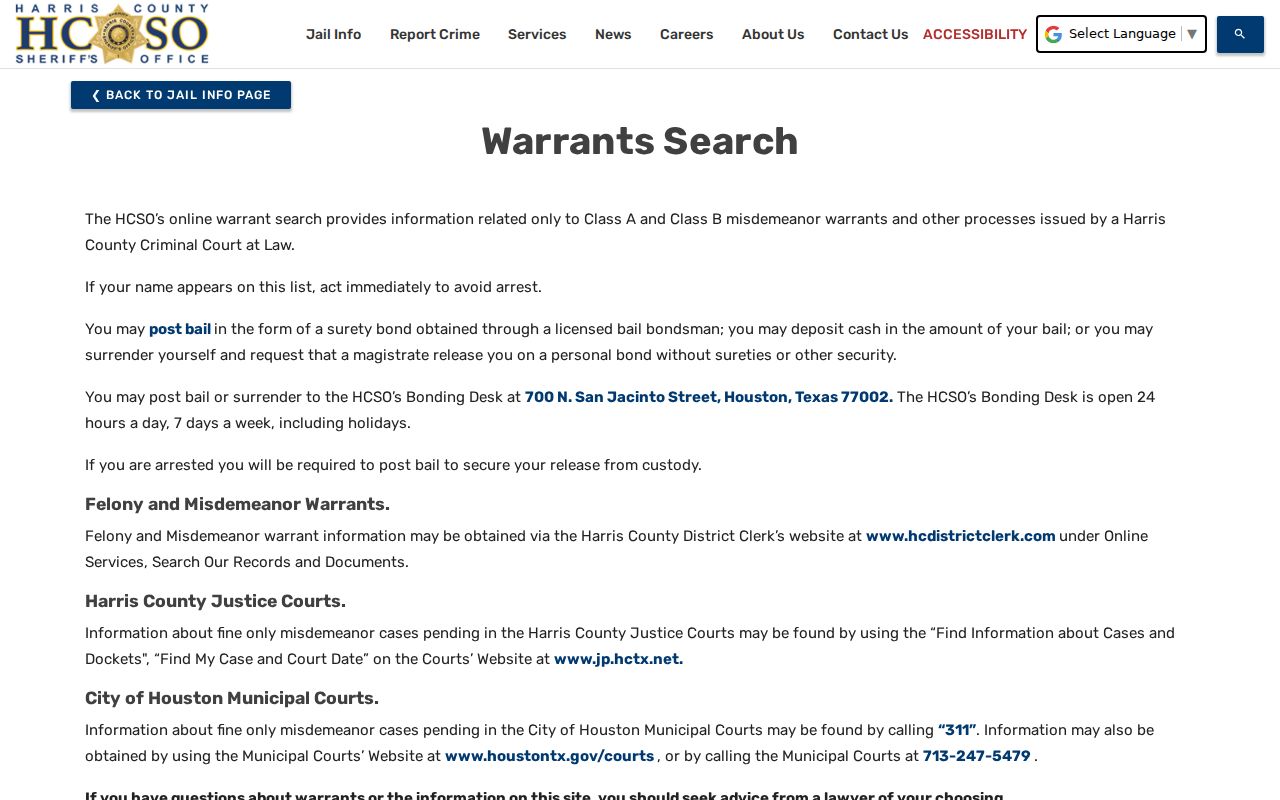
A scope statement defines what the local search can answer. It says nothing about another Texas court's file. The Bexar County active felony-warrant map shows a blank search control and the record-column headings, with no returned case exposed.
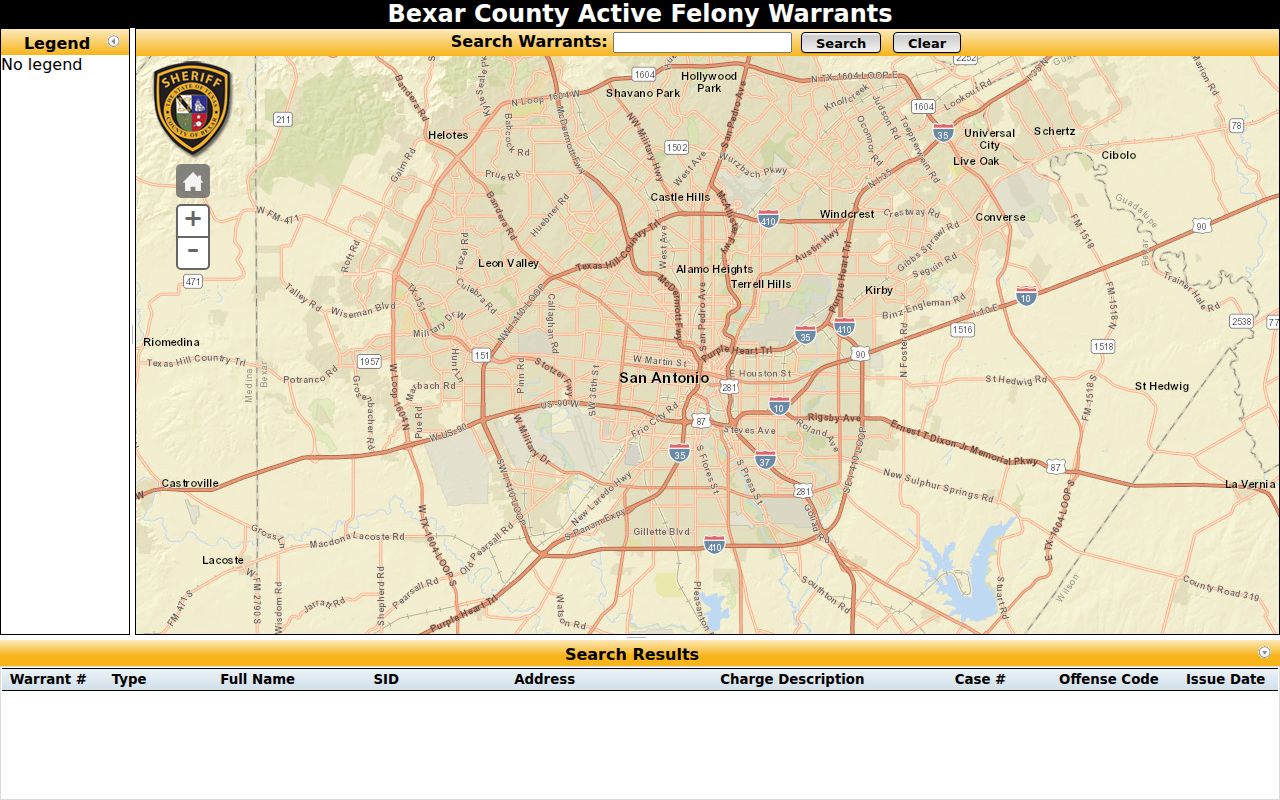
The single visible search field and its table of results belong to that one Texas county dataset. Its required-field and matching rules are not published.
Active Warrants: What They Show
A Texas local record shows fields that help a clerk locate the case. No statewide public format is required. Read the Texas court, cause or citation number, warrant type, and issue date together. A name and a status label alone are thin. Ask the issuing court for the docket entry and warrant return. One row is not a final finding about the case.
| Warrant number | A local process number, if the portal publishes one. Texas formats vary and are not interchangeable. |
|---|---|
| Case or cause | The underlying Texas court file or citation that helps the clerk retrieve the matter. |
| Issuing court | The Texas court or magistrate that authorized the warrant and controls recall or further settings. |
| Warrant type | A label such as arrest warrant, alias capias, capias pro fine, or another Texas court process. |
| Charge and date | The offense description and issue date, if those fields are included in the Texas local view. |
| Status | May describe active, served, returned, or recalled process; display terms can vary by Texas portal. |
| Bond | A posted amount or bond type may appear, but confirm current release terms with the court. |
Bexar County posts a public table listing Warrant Number, Type, SID, Case Number, the offense code, and the issue date. Harris takes a different route, tying each active warrant to an SPN reference number in its own result layout. Texas warrant records like these are built county by county, so a number in one system may not point to the same case in another. Never merge identifiers across Texas systems on your own. Note: Texas warrant fields are local labels, not one statewide record standard shared by every county and court.
Texas Active-Warrant No-Hits Leave Questions
A clean Texas result only clears one query in one public dataset. That is all it proves. A Texas warrant can still sit in a city or JP docket. It may fall outside a sheriff portal's case types, be too new for a feed, or sit in a sealed or restricted record. TCIC is not open to public search. OmniBase's FTAP page states plainly that it holds no Texas warrant information. An FTAP no-hit likewise tells you nothing about nonparticipating courts or other warrant types. Errors also run the other way. A similar name, a stale status, or local Texas data lag can make a displayed row a shaky basis for calling a warrant live. Treat any possible Texas match with care. Compare the case number and court against your papers. Then call the issuing clerk. Ask whether the warrant is active, served, returned, recalled, or quashed, and whether another hearing remains.
Check with the issuer: A Texas no-hit is not proof that a warrant does not exist, and a public listing is not confirmation that its status is current.
Texas Warrant Roundups
"Warrant roundup" usually means a local Texas court or law-enforcement push. It is not a statewide Texas database. Local campaigns and sheriff lists have separate instructions. The Texas 10 Most Wanted program is separate too. DPS and its partners pick a limited set of Texas cases for public tips and reward information. It is a curated fugitive program. It is not a name-based search for every active warrant. Use the official Texas 10 Most Wanted program page for its current categories and tip routes. It will not show every active warrant, and it cannot tell you whether a Texas court has recalled an order. The State Most Wanted page describes that selected program. For a local roundup or a question about your own case, start with the issuing Texas court through the county directory.
Texas Warrant-List Dates Do Not Prove Coverage
A "daily update" note describes one local display's refresh practice. It does not describe every Texas court record. Harris County's misdemeanor list updates daily. Bexar County's active felony map and the Collin County case links publish no common statewide completeness guarantee, and the sheriff's office in Tarrant County, Texas, says it does not disclose criminal warrant status to the general public. Each Texas page has its own scope, lag, and access terms. The Collin County case-information page links local Texas case and warrant resources, with a warning that all warrants may not be viewable to the public. Read that warning before relying on it.
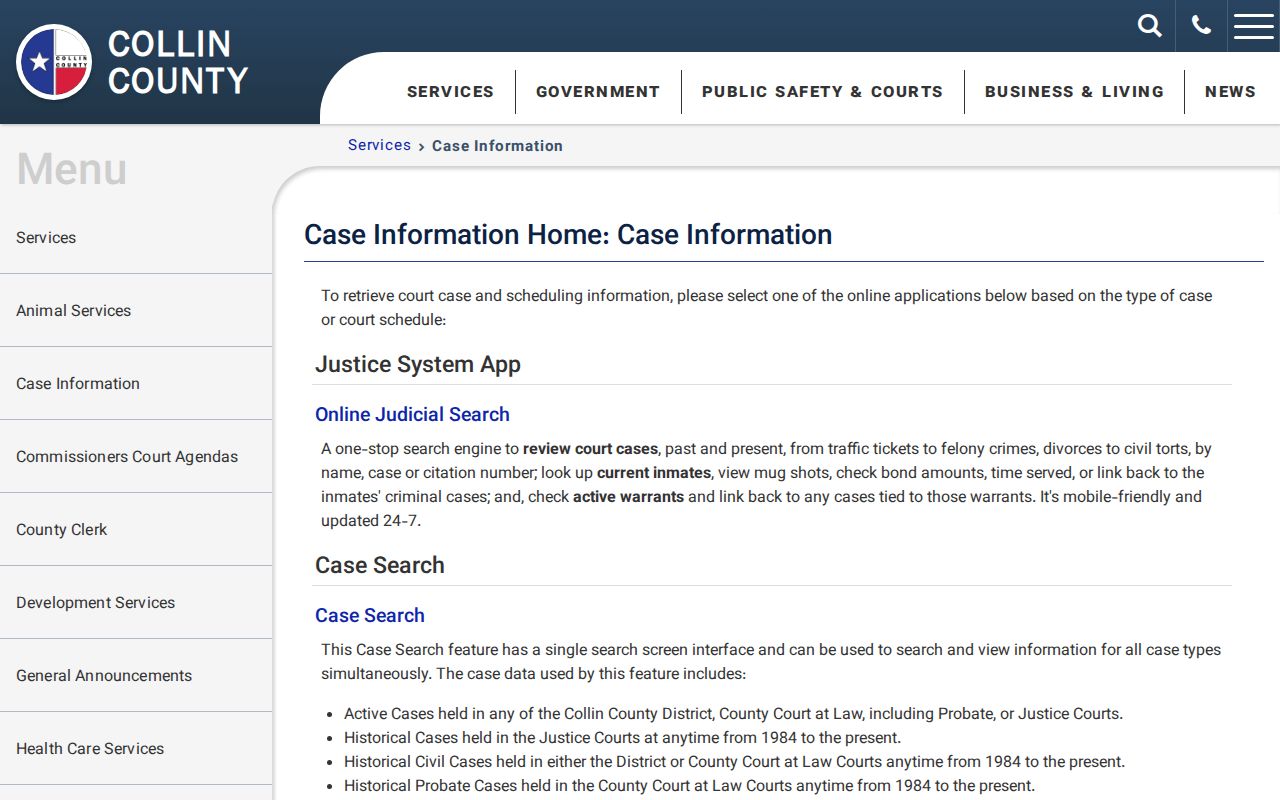
That warning belongs to one local county channel. It is not a claim about all Texas counties. The Tarrant County Sheriff criminal-warrants page states that the office does not release criminal warrant information to the general public.
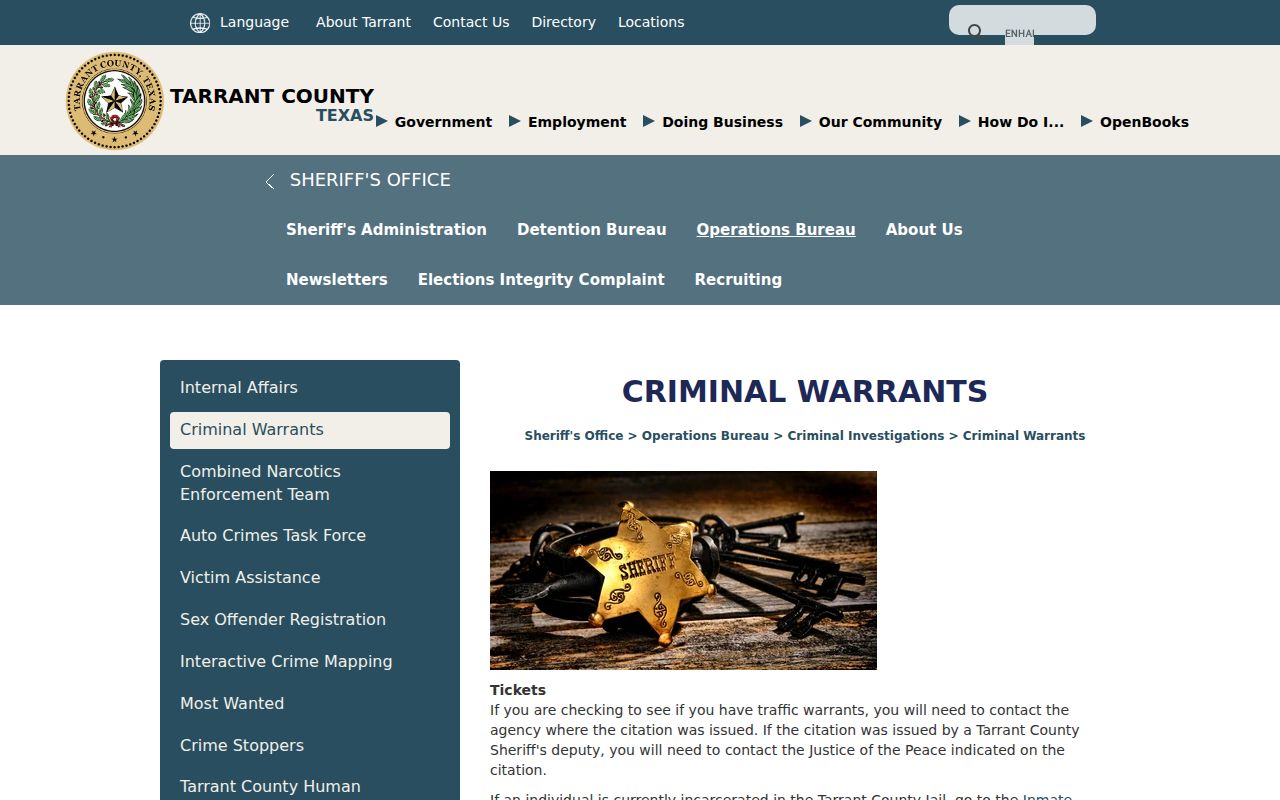
A county list is not the last word. Ask the issuing court which record route applies. Note: Texas county list updates do not promise that a separate court docket or service record is complete.
After a Texas No-Hit, Call the Issuer
A Texas no-hit is not the end. Pull out your citation, court notice, or prior case number and find the issuing Texas court. Ask the Texas clerk directly. Ask whether an active warrant is attached, what type of process it is, and what action the court requires. If the case is not online, request the Texas clerk's records route. Texas court records follow Texas Rule of Judicial Administration 12. Public access to a docket and the existence of an online search are separate questions. If the clerk sends you to a service agency, contact the sheriff or constable warrant unit, or the municipal police or marshal for a city-court case. Some Texas agencies refuse to confirm criminal warrant status publicly. So ask the court what official route applies. A Texas FTAP hit from the Texas Failure to Appear Program is a participating-court report, not an arrest-warrant confirmation. OmniBase's program FAQ says FTAP holds no warrant information. Contact each reporting court about its own case. For a possible federal warrant, skip the county search. Use federal counsel, the federal court, or the U.S. Marshals district office. The Texas county directory helps locate the local court and sheriff for a state or county case.
Finding Your Own Name on a List
Spotting a name like yours on a Texas public list is not the end of the story. Slow down. Compare the details, not just the name. Check the Texas court, the cause number, and any other identifying facts against paperwork you actually have. A close match is still only a match. Call the clerk of the issuing Texas court and ask directly about the warrant status, what action was ordered, any hearing date on the calendar, and which agency serves the paperwork. Sheriff, constable, city police, marshal, the clerk will tell you who handles it. Use that agency's official contact route rather than a secondhand tip line. Nothing online replaces the court's own answer. If the record is not posted online, ask the clerk how to request the docket entry or the warrant return. A possible warrant is a good reason to talk to a lawyer about resolving the case safely, and a poor reason to trust a list. The Texas county directory can point you to the right local court and sheriff. A DPS most-wanted page has its own tip channel. That channel is for reporting information, not for checking your own status. Federal matters run on a separate track entirely, through federal court and your own counsel. No Texas county page can confirm a federal warrant, and a public docket may leave its status unclear.