
How Arrest Warrants Work in Texas
Texas Code of Criminal Procedure, Chapter 15 supplies the framework. It defines an arrest warrant as a Texas magistrate's written order, directed to a peace officer or another person the order names, commanding that the accused be brought before the law. A magistrate issues one when a sworn complaint lays out facts supporting probable cause and Texas law gives that magistrate authority to order the arrest. The complaint or affidavit procedure varies with the offense and the court process involved. What the warrant does is authorize custody so the person can appear before a Texas magistrate or court; it does not settle whether the charge is true, and the case can continue after a bond release. Anyone checking their own status should confirm the court record and any service record with the offices that keep them. Keep in mind that a Texas law-enforcement index is not a public warrant search.
Texas Arrest Warrants Need Sworn Probable Cause
Article 15.02 lists the basic Texas warrant elements. The order must identify the person by name or a reasonably definite description, state the offense alleged, and carry the magistrate's signature and office. Article 15.03 covers when a magistrate may issue process after someone swears that another person committed an offense. For a Texas Justice or Municipal Court, Chapter 45A offers a route to an arrest warrant built on a sworn probable-cause complaint. These legal terms are simpler than they sound. A sworn complaint is a statement made under oath, and probable cause is the threshold a Texas magistrate weighs. What the public usually sees is a local Texas docket entry or the executed warrant, not a statewide affidavit search. Read the order and the case record together, and if a required detail stays unclear, the issuing clerk or counsel can explain what the Texas court has on file.
- Probable cause
- Facts sufficient under law to support a reasonable belief that a person committed an offense.
- Sworn complaint
- A statement made under oath and submitted to support a warrant request.
- Magistrate
- A judicial officer authorized by law to issue certain process and perform initial duties after an arrest.
For lower-court cases, the Texas Chapter 45A text covers justice and municipal procedures.
Arrest Warrants: What They Contain
Texas portals share no single arrest-warrant format. A local record may attach a cause number, citation, county, offense code, or court label to the warrant. One field may point to the case while another points to the warrant itself. Statuses also lag: a display can trail a Texas court order or an officer's return, so read each field as the local system's label until the clerk confirms it.
| Warrant or case number | Texas local identifiers used to find the instrument and underlying docket; formats differ by court. |
|---|---|
| Person and offense | Name or description plus the alleged offense; Texas public interfaces may add identity fields or descriptors. |
| Issuing authority | The Texas magistrate or court associated with the order and the clerk who maintains the case record. |
| Issue and return dates | When Texas process issued and any date or return information recorded after service or nonservice. |
| Bond and status | Bond type or amount, if shown, and Texas local labels such as active, served, recalled, or returned. |
Those fields are a reading guide, not a promise that every Texas court publishes each item online. A public interface can leave out an affidavit, a return, or the current service detail. Ask the Texas clerk which number identifies the case, and request the current docket entry when the portal is unclear. Note: Texas warrant fields are local labels, so do not treat a date, amount, or status as the statewide record format.
Texas Arrest Warrant Issuers Cross Court Tiers
The judge who tries a felony is not always the magistrate who signs the warrant. Texas places magistrates at several levels: district and county judges, justices of the peace, municipal judges, and other officials defined by state law. So a felony may be tried in district court while a magistrate in another local court issued the warrant. Authority depends on the statute, the assignment, and the offense. Knowing the Texas trial-court hierarchy helps you find the right clerk, but appellate courts are not the ordinary place to confirm a trial warrant. District clerks generally keep district criminal records; county clerks keep many county-level records, though a statutory court may have its own; JP precinct clerks and municipal clerks hold the lower-court dockets. The Texas Judicial Branch court-structure overview explains the levels, though local confirmation still matters. Note: the clerk and the issuing court can differ from the magistrate who signed the Texas warrant.
How Warrants Get Served in Texas
Serving a Texas arrest warrant falls to a county sheriff or deputy, a constable, city police, a municipal marshal, a Texas DPS officer, or another peace officer with authority over the process. One local agency can call on another department for help. A federal marshal may step in when federal process or a joint fugitive matter applies. The serving agency and the court that owns the case can sit in different Texas counties.
| Serving role | Typical Texas work | Record to confirm |
|---|---|---|
| Sheriff or deputy | Executes Texas county criminal process and may maintain a county warrant inquiry channel | Local Texas service entry and custody record |
| Constable | May serve Texas Justice Court process from a precinct | Texas JP docket and constable return |
| City police or marshal | May execute Texas municipal-court and city criminal process | City court docket and Texas municipal service record |
| DPS or other peace officer | May execute authorized Texas statewide or local process | Texas entering agency and issuing court records |
Article 45A lets a peace officer or municipal marshal serve municipal process in Texas. Not every warrant lives in one place. A county sheriff's page will not speak for them all, and some Texas agencies decline to confirm current criminal-warrant details publicly. So ask which agency actually holds the service record.
Executed Texas Arrest Warrants Become Public Records
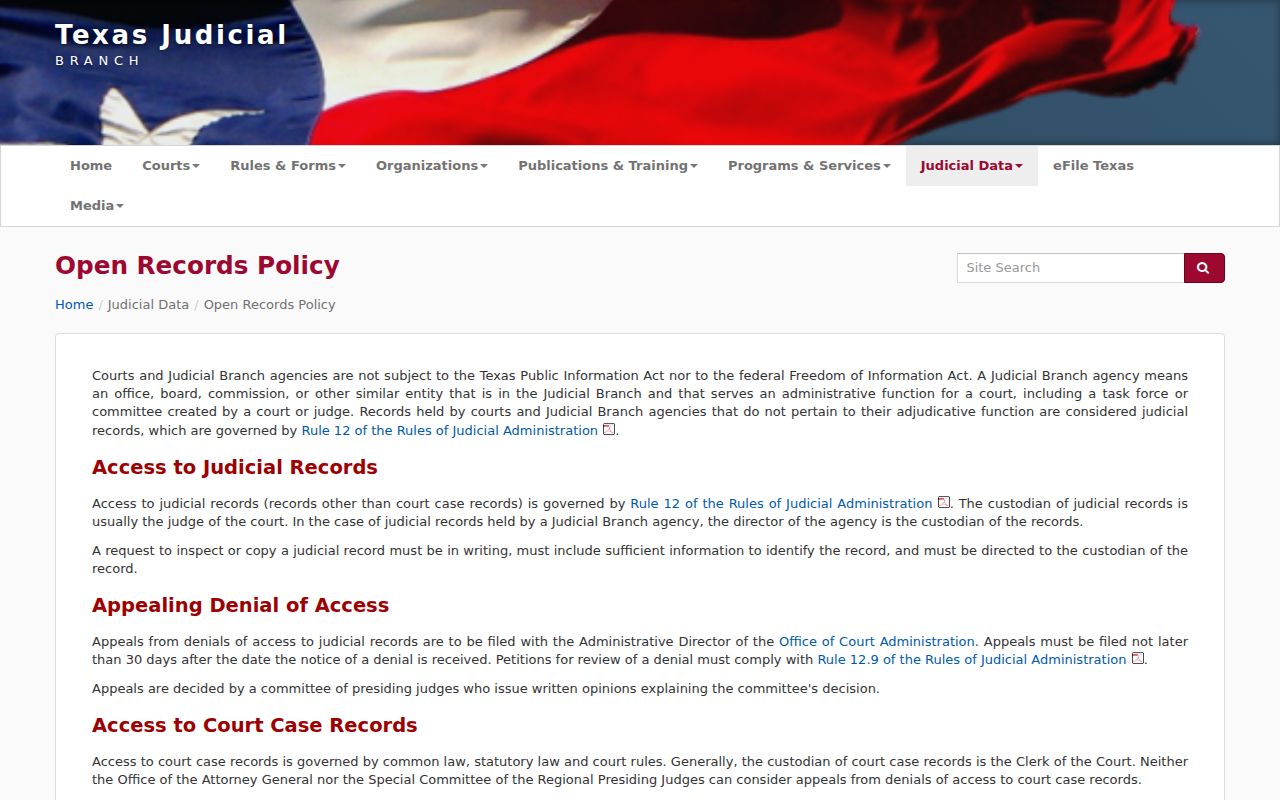
Executed arrest warrants become public in Texas. Article 15.26 of the Code of Criminal Procedure says so, and the supporting affidavits are public information too. Once a Texas warrant is executed, the magistrate's clerk must let the public inspect copies, subject to applicable law or court order. The rule works through the office that keeps the record. It promises no free online copy before execution. Nor a complete statewide search page. The Texas Judicial Branch open-records policy explains Rule 12 and the statutory access rule for arrest warrants issued in Texas.
Online access still varies across Texas by court and agency, so a public record may need a request to the clerk who keeps it. Separate restrictions apply as well. A child's arrest warrant and its supporting materials stay confidential under Texas Family Code Section 58.010, and juvenile fine-only records carry their own limits. A Texas court can also seal a record under the law. An agency-held record may raise an active-investigation exception under the Texas Public Information Act. Public access does not open every affidavit. Pre-execution records often stay closed. For a Texas request, name the court or agency, the case number, the record type, and the date range. A blanket ask for all Texas warrants cannot pull every county court file from DPS. Rule 12 governs judicial records, while the Public Information Act covers executive bodies, subject to statutory exceptions. So request a specific case record from the office that holds it, because DPS cannot retrieve every Texas court's local files.
Arrest Warrants, Summonses, and Bench Warrants
Texas court papers can sound alike yet do different jobs. An arrest warrant directs an authorized Texas officer to take an accused person before the law. A summons or notice just calls for attendance. When a court issues an arrest warrant or capias after a missed date, that is a separate action of its own. People say bench warrant for process after nonappearance. The real paper may be titled arrest warrant or capias.
| Process | Why it appears | What to ask the court |
|---|---|---|
| Arrest warrant | A Texas magistrate finds the legal basis to order arrest, commonly on sworn probable-cause materials | What Texas charge and issuing authority does the warrant identify? |
| Summons or notice | Directs a person to attend a Texas court event or respond as stated | Was a separate Texas warrant or capias later issued? |
| Bench or FTA process | Follows a missed Texas appearance or other court-process violation | Which Texas missed obligation and court order are involved? |
A capias pro fine is its own Texas tool. It enforces a qualifying fine-only judgment after required process. The Bench Warrant Lookup breaks down the wording around missed Texas court dates and fine judgments.
Texas Arrest Warrants Can Cross County Lines
A Texas warrant can be acted on outside the county that issued it. One condition applies. The record must be entered and available to the serving agency. Control never moves, though. The issuing Texas jurisdiction still owns the underlying case and picks the legal next step. Arrests in other counties only shift the opening steps. A magistrate there may handle the initial warnings and bail duties. Prosecution stays with the original court. County of arrest and county of prosecution can therefore differ. That Texas split matters when a family member starts asking. The arresting jail or agency can explain custody and initial appearance records. The issuing clerk can explain the charge, a recall, and the next setting. Out-of-state arrest, extradition, a governor's warrant, and federal process run on separate tracks. For a state case, use Browse Counties to locate the issuing court and the local sheriff or constable. A hit in one Texas county never sums up another court's docket.
Note: A Texas county where a person is arrested can hold custody records even when another court owns the charge.
Handling an Arrest Warrant in Your Name
Think a Texas arrest warrant may be active in your name? Confirm the case first. Find the issuing court and ask whether the record is active, whether counsel can arrange a voluntary surrender or bond, and whether the court would consider recall or a setting. A Texas court clerk can explain its own docket. Counsel can advise on the safest way to face the case. There is no single public bond amount. No walk-in process covers every Texas offense statewide. If an arrest already happened in Texas, the questions change. Ask which court controls the case. Ask whether bond or a release order was entered, and whether another hold remains. Bond may secure release without dismissing the charge. The court sets the next hearing. It also decides any legal outcome. Use Browse Counties to reach the right clerk and service agency, and keep written receipts or court orders when the warrant is recalled or the case is reset.
Urgent: A Texas arrest warrant authorizes custody. Confirm the issuing court’s instructions with counsel or the clerk before making a plan to appear or post bond.
After Service, Texas Arrest Warrant Records Split
Texas Chapter 15 warrant and magistration provisions lay out the statutory path after service, and the local clerk and jail fill in the case-specific status. Once an arrest warrant is served, the paperwork splits. The officer's return tells the court whether the warrant was executed. The docket shows what happens next in the case. An online court page may give you only a bare status label. The jail, the arresting agency, and the issuing court can each hold a different piece of the timeline, so one screen rarely tells the whole story. You can request an executed warrant and its supporting affidavit through the Texas magistrate's clerk under Article 15.26, though juvenile confidentiality and any seal order still apply. The officer must bring the arrested person before a Texas magistrate without unnecessary delay. Article 15.17 sets the initial warnings and magistration steps, with a 48-hour limit for covered cases. Ask the clerk three things: whether a bond or release order was entered, what court date follows, and whether any other case or hold is still open. One more wrinkle deserves patience. A law-enforcement entry can lag behind a recall, so confirm both the Texas court order and the responsible agency's service update. Note: A release order and a recalled warrant are separate docket actions; keep the court's written confirmation.