
How Traffic Warrants Work in Texas
A Texas traffic warrant is not a mystery. It is court process on a citation that went unanswered. Most Texas traffic tickets start in a municipal court or a justice court. Miss the court date and the judge can issue an arrest warrant or an alias warrant under that court's procedure. Failure to appear, or FTA, simply means the case went unmet when required. It marks a case status rather than a separate statewide warrant record. Unpaid judgments move down a different road. The court can pursue collection, including a Texas capias pro fine, once it completes the required ability-to-pay or hardship steps. In plain terms, that writ collects an unpaid fine after those findings. A missed-date warrant and a capias pro fine remain distinct actions. The Texas issuing court's docket shows which one sits on the case, and that same court decides what resolves it: payment, a fresh appearance, a payment plan, or some other step.
Texas FTA and Capias Pro Fine
Since January 1, 2025, justice and municipal court procedure in Texas runs through Chapter 45A of the Code of Criminal Procedure. Article 45A.104 lets a judge issue a warrant on a sworn complaint stating probable cause. The same article orders recall of an FTA arrest warrant when the person shows up voluntarily and makes a good-faith effort to resolve things before the warrant is executed. That rule covers a qualifying FTA arrest warrant only. It does not erase the case or fix the outcome of every citation. Article 45A.259 handles the Texas capias-pro-fine process after the court's hardship determination. Local screens use shifting labels. An entry may read warrant, capias pro fine, unpaid citation, or failure-to-appear notice. Those terms do not always mean the same thing, so read the case entry and then ask the issuing court what process exists and what it will accept. The court record, not a license-hold result, controls the next step. Read the current Texas Code of Criminal Procedure, Chapter 45A for the full justice and municipal court process.
How Texas Flags a License Hold
Texas has no public, all-county warrant search through its failure-to-appear program. The Texas Failure to Appear / Failure to Pay Program, or FTAP, is a license-renewal reporting channel instead. Under Texas Transportation Code Chapter 706, a political subdivision can contract with the Department of Public Safety to report qualifying failures to appear or pay. The participating Texas court reports the case. The hold can then block renewal of a Texas driver license until that court clears it. OmniBase Services of Texas runs the program-facing lookup and the court interface. A hold is not an instant suspension. OmniBase says a valid license stays valid through its renewal date even with a hold present. Other Texas suspension rules may still bite, so the court must confirm what is owed and whether an appearance or another resolution is required.
| System | What It Holds | Run By |
|---|---|---|
| Texas FTAP | Reports of qualifying unresolved violations from participating Texas courts, used to flag renewal eligibility | Texas DPS with OmniBase as contractor |
| Texas license-renewal hold | Renewal of a Texas driver license until each reporting court clears its case | Texas DPS, based on court reports |
| Texas traffic warrant and court case | The Texas court's citation, process, status, and instructions for recall or resolution | Issuing Texas municipal or justice court |
Texas FTAP Coverage Depends on Participation
A positive Texas FTAP result means one thing: a participating court reported a qualifying matter that matched what you typed. It does not say a warrant has issued. The public form asks for a Texas driver license number and date of birth. There is no county or court selector, no citation-number field, no agency dropdown, and no payment control or warrant-status field. The lookup is free, and it takes no payment for a court fine. OmniBase's 2025 summary reports 805 participating Texas cities and 243 counties. Treat those as vendor-reported program figures, not a state audit and not proof that every Texas traffic case appears. No complete participant roster is on display, so some eligible-looking cases still need a direct local check no matter what FTAP returns. The Texas failure-to-appear lookup presents the driver-license and date-of-birth fields the public FTAP query uses.
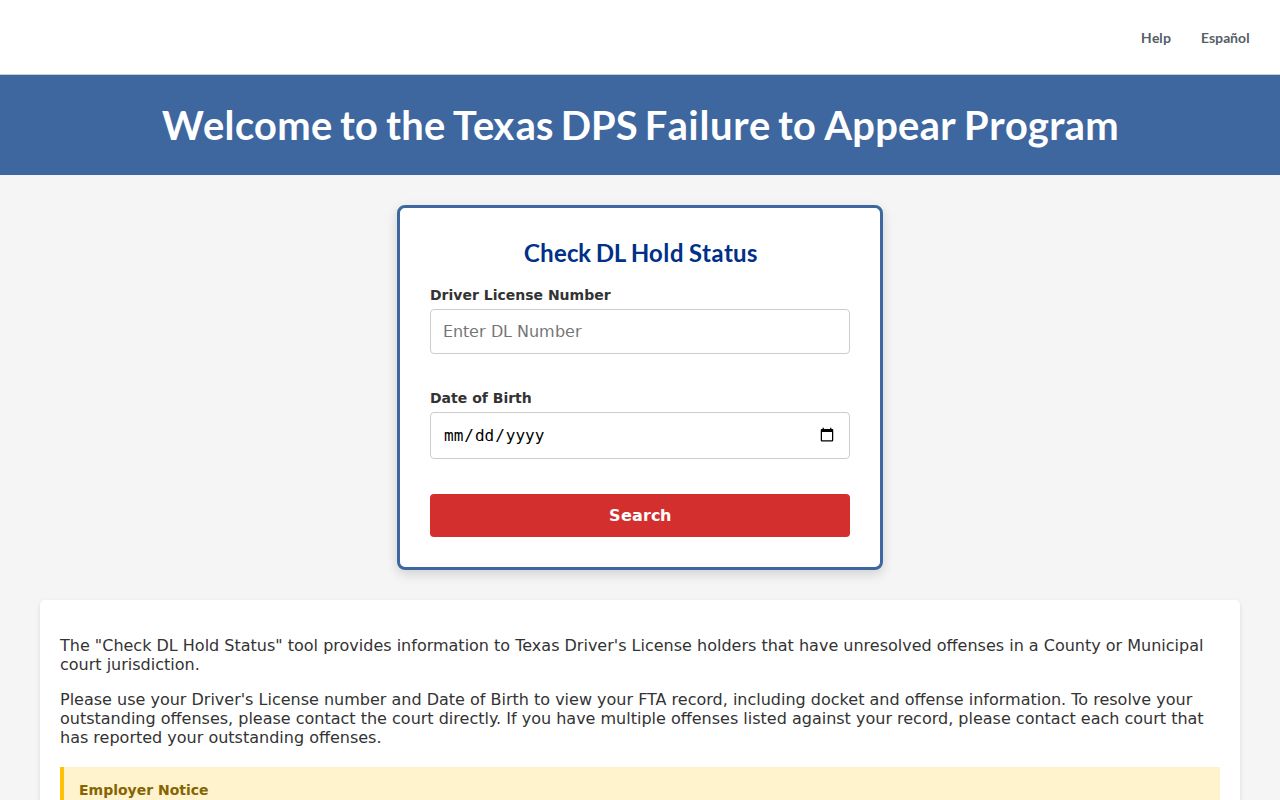
Those fields search a reported Texas license-renewal hold, not a Texas arrest-warrant file or a full court docket.
Texas Traffic Warrant Checks
A solid warrant check layers the FTAP result with the offices that hold the case. The citation usually sits with the city municipal court or JP court that received it. A Texas county sheriff or constable may offer a local public warrant inquiry, but a traffic warrant can be missing from a sheriff's public list. When the citation came from a city, call that city's court even if the county directory was your first stop.
- Search the public FTAP form with the requested driver-license number and date of birth. Treat any result as a participating Texas court's license-hold report, not proof of a warrant.
- Use the Browse Counties directory to reach the Texas county and identify the relevant JP precinct, municipal court, clerk, and any sheriff or constable inquiry.
- Ask the Texas issuing court to confirm the case number, citation, court date, current process, balance, and whether a warrant has been recalled or remains active.
- If the Texas docket or executed-warrant record is not posted, ask the court about its records request process. For legal advice about appearing or surrendering, consult a Texas attorney.
Need a straight answer on a Texas traffic warrant? Ask the court clerk first. The clerk verifies docket status and explains how to resolve the case. For service questions, try the sheriff, constable, or city agency that serves it, though the city court may still control the citation.
Texas FTAP Does Not Confirm Warrant Status
FTAP answers one narrow question. It shows whether a participating Texas court has pushed an eligible case into the driver-license renewal channel. It carries no warrant information at all. OmniBase's public FAQ is blunt. A Texas court can hold warrant process that FTAP never reflects. A renewal hold can sit on a license while an arrest warrant exists, or while none does. The OmniBase public FAQ says plainly that the Texas program is not a warrant search and sends readers to the court that reported the case.
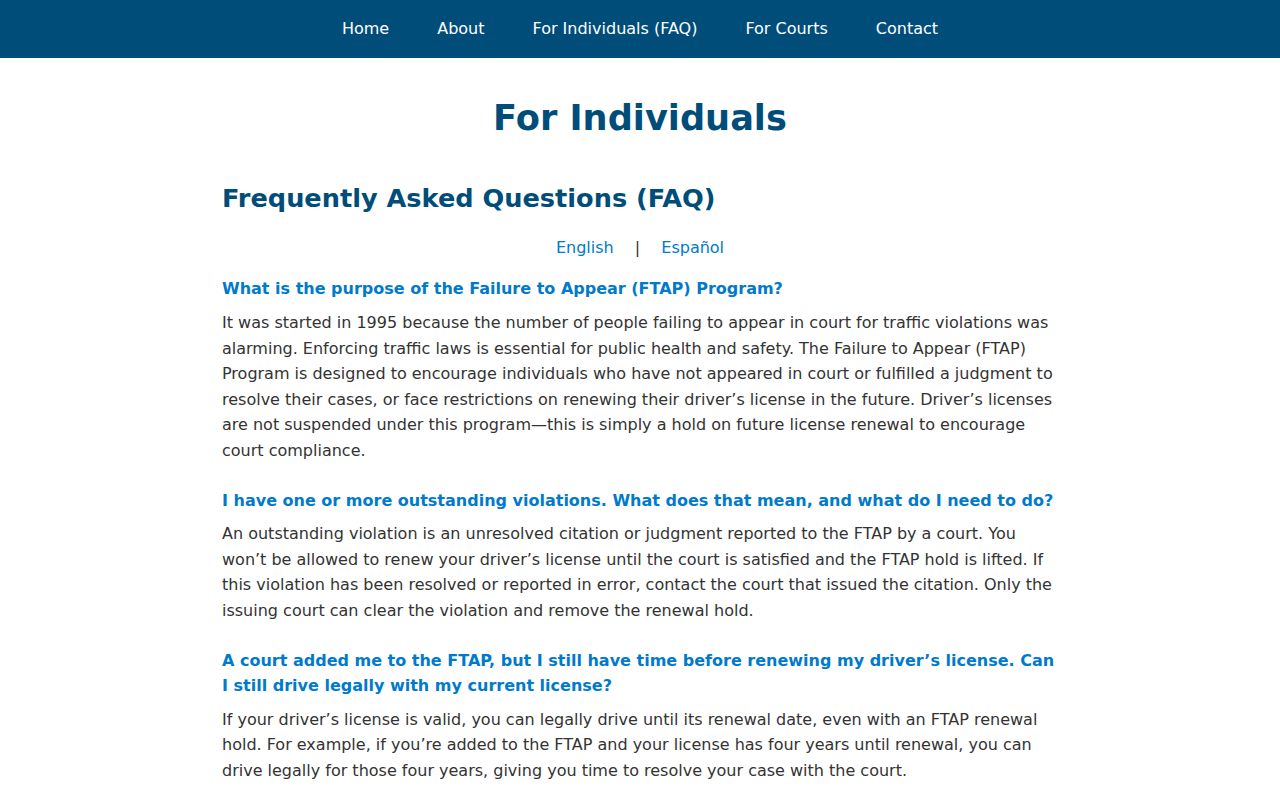
Only the Texas court can confirm whether a warrant exists. Neither OmniBase nor DPS makes that call. The court also decides what action clears its case. So a clean FTAP result proves little about traffic warrants. The Texas court may not participate, or the matter may not fit the program's reporting rules, or a bench warrant may sit in local Texas files untouched. Check the court tied to the citation, ask the serving agency when needed, and never treat a license-renewal response as warrant-status confirmation.
Clearing a Texas Traffic Warrant
Texas sets no single pay-or-lift amount. No state payment portal recalls every Texas traffic warrant. The issuing court decides what clears its case. That might mean paying the fine, appearing on a reset date, arranging a bond to reinstate the charge, requesting a payment plan, or asking for an ability-to-pay review. A payment alone may not recall a warrant issued separately. The recall only happens once the Texas court records it.
- Confirm the Texas citation, court, case balance, and whether the court requires an appearance before payment.
- Ask the clerk whether the judge will reset the case, recall the warrant, accept a bond, or approve a payment arrangement or indigency review.
- Pay or otherwise resolve the case only through a channel named by that Texas court, then request confirmation that the warrant was recalled.
- Ask the reporting Texas court to send FTAP clearance and retain the receipt and court confirmation while the update is processed.
Important: Resolving a license hold does not itself recall a court warrant; confirm the warrant's status with the issuing court and its serving agency.
Payment details vary by Texas court. Each sets its own methods, convenience charges, payment-plan terms, and appearance requirements. OmniBase says the money goes to the Texas court itself. Nothing goes to the vendor or DPS. When more than one court reported a violation, each Texas court must be handled separately.
Texas Traffic Warrant Fees Have Different Triggers
Texas fee rules set no standard lift amount. The triggers matter more than the totals. The $10 Texas FTAP reimbursement fee under Texas Transportation Code §706.006 runs through the reporting court. It is normally paid when judgment is entered, when the underlying case is dismissed, or when bond or security is posted to reinstate the case. Statutory exceptions apply. A person found indigent is one. The fee is also separate from a fine, court costs, a bond, or a local payment-provider charge. Serving a warrant can add a different cost. Texas H.B. 2282 amended Texas Code of Criminal Procedure Article 102.011(a)(2). It sets a $75 reimbursement fee for executing or processing an arrest warrant, capias, or capias pro fine on qualifying offenses committed on or after September 1, 2025. OCA cost charts list January 1, 2026 as the assessment start date. In the statutory circumstances this is a conviction cost. It is not an up-front statewide release price. Offenses committed before September 1, 2025 stay under the earlier $50 amount.
| Charge | Amount and Scope | What It Is Not |
|---|---|---|
| Texas FTAP reimbursement | $10 under Texas Transportation Code §706.006, with indigency and statutory exceptions | Not a universal warrant-lift fee |
| Texas warrant execution or processing | $75 for qualifying offenses committed on or after September 1, 2025; assessment begins January 1, 2026 under OCA charts | Not an up-front state payment to release a person |
| Older qualifying Texas offense | Earlier $50 amount applies to offenses before September 1, 2025 | Not a fee that applies to every citation or disposition |
| Local Texas fine, bond, or provider charge | Confirm the itemized amount and payment method with the issuing court | Not set as one statewide total |
Want the statutory text? Read Transportation Code Chapter 706 and H.B. 2282. The Texas OCA municipal-court cost chart gives the assessment timing. For any Texas case, the court must explain which charge, offense date, and resolution it applies.
Texas Traffic Warrant or Driver Record
A Texas traffic warrant belongs to one case. It is court process tied to a specific citation. A license-related status may surface while you check a Texas traffic matter, but the records are not interchangeable. The court keeps the case and controls warrant recall. Texas DPS and the FTAP reporting chain show only the renewal hold a participating court sent. The public FTAP lookup returns no driving history, license points, or warrant status. It is a renewal-hold check. It is not a general Texas driving-history or insurance lookup. For the case and the warrant, use the Texas issuing court. The licensing channel covers only what it reports.
| Feature | Traffic Warrant | FTAP License-Hold Record |
|---|---|---|
| What it is | Texas court process tied to a citation or unresolved case | A Texas renewal hold from a participating court's report |
| Custodian | The issuing Texas municipal or justice court and serving agency | The reporting Texas court, OmniBase interface, and DPS update chain |
| What it answers | Whether court process exists and what the court requires | Whether a reported violation is affecting license renewal |
| How it clears | The Texas court records recall or other case resolution | The Texas court sends satisfaction or removal information |
| Where to confirm | The court linked through Browse Counties and its service agency | The FTAP form, then the reporting court for case detail |
Texas Traffic Warrants After Court Clearance
After a Texas court records satisfaction and sends the clearance report, DPS says the driver record generally updates within three to five business days of receiving it. The clock starts with the court's report, not the payment. OmniBase cannot directly remove a reported Texas violation at a reader's request. Only the reporting court can move that along. Still seeing the hold after that window? Call the Texas court and confirm it sent the clearance report. Then follow the DPS program's current instructions. The DPS failure-to-appear and failure-to-pay page describes the clearance update process and points readers back to the court.
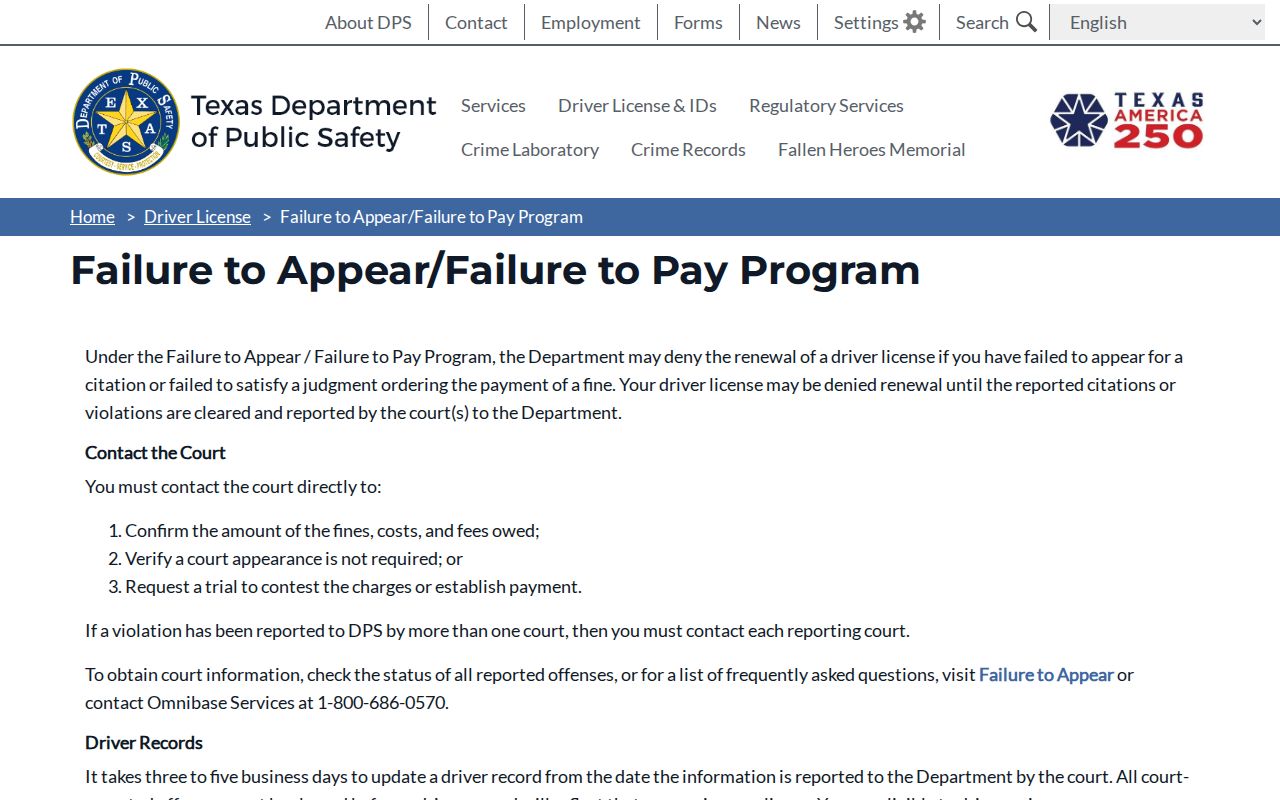
Once a Texas court clears your case, hold onto the receipt and case number. You will want both when you ask whether the renewal hold is gone. A cleared hold proves one thing only: the reporting court sent its update to that Texas program. It says nothing about a warrant still open in a different Texas case. It also does not show that every court takes part, or that the court's own warrant record was recalled. Check each case with the issuing court and the sheriff, constable, or city agency that serves it. For a county-by-county route in Texas, start with the Browse Counties directory.