
Texas Warrant Searches
Texas keeps its statewide warrant file behind a law-enforcement wall. There is no public Texas Crime Information Center name query for residents. DPS runs that Texas index through the Texas Law Enforcement Telecommunications System, tied to the FBI's National Crime Information Center for authorized law-enforcement users only. So Texas offers no statewide warrant-search site for the public. Your workable routes are local instead. Check the issuing court's case system, a county sheriff search where one exists, or a records request to the agency holding the file. The Texas warrant itself belongs to the court that issued it. A sheriff, constable, or city agency may serve it. Use your Texas case papers to pick the likely court before searching. A Texas city citation or fine-only traffic case usually sits in a municipal or Justice of the Peace court. That local Texas clerk is your first stop. If a name matches, enter a full legal name and date of birth where the portal accepts them. Then ask the issuer for the case number and current status.
- Find the Texas court and county named on a citation, summons, court letter, bond paper, or earlier case record. For a Texas traffic or city matter, start with the municipal or Justice of the Peace court that received the filing.
- Check that court’s case system, then the Texas sheriff’s official search if one is available. Read its stated court and offense limits; some Texas sheriff offices do not offer public criminal-warrant confirmation.
- For the Texas local court and sheriff route, open the Texas county directory and select the county tied to the case.
- If the question concerns a driver-license renewal hold, use the Texas Failure to Appear Program lookup with a driver’s license number and date of birth. It covers participating Texas courts’ reported violations, not warrants. Call the issuing court or request agency-held records under the Texas Public Information Act when needed.
- For a federal case, use federal court or attorney channels. PACER shows public docket material, not every federal warrant or its live status.
Texas warrant searching is a sequence, not one lookup. The Texas county directory leads to each filing location's local Texas court and sheriff layer.
No Public Texas Warrant Index
Texas DPS calls TCIC a statewide law-enforcement information service. Authorized users reach wanted-person information through TLETS. The Texas public cannot sign in or run a name. So no Texas warrant check can return one complete statewide answer. Historical legislative material says DPS shut its public Texas warrant-search page in March 2004. That old page is not a current service. Older directories still point to a supposed Texas DPS warrant lookup. Ignore that and start with a Texas court or sheriff source. A law-enforcement index can flag a wanted record for an officer. It still does not replace the docket, warrant return, or recall entry held by the issuing Texas court.
Key point: TCIC is not open to public searches, and Texas has no public statewide active-warrant portal that covers every court and county.
Note: Pre-March 2004 Texas DPS public-search references describe a discontinued page, not a current warrant check.
What a Texas Warrant Search Asks For
Texas has no common public search form. Each Texas local portal asks for different details. Required fields often go unmarked in the public view. A name and date of birth can narrow a match. A similar name alone cannot identify a person or confirm an active warrant.
| Portal | Visible Fields | Required | Scope or Note |
|---|---|---|---|
| Texas TCIC | No public query fields | Not applicable | Law-enforcement access only through TLETS. |
| Texas FTAP | Driver License Number; Date of Birth | Instructions require both | Participating Texas court FTA/FTP reports and license holds, not warrants. |
| Harris County Sheriff search (Texas misdemeanors) | First Name; Last Name; SPN; Date of Birth | Not specified | First four name letters may be used; SPN is eight digits; DOB example is MM/DD/YY. |
| Bexar County, Texas active felony map | One Search Warrants field | Not specified | Accepted matching rules and field requirements are not published. |
| Dallas, Texas municipal case portal | Name, DOB, citation, docket, police case, warrant number, and other case fields | Not specified | Dallas case form offers a similar-sounding-name option, recommended for hyphens or misspellings. |
Dallas city help in Texas covers citation formats. A citation number may use a C followed by digits, with the dash omitted, and the example name search takes last name, first name, and DOB. None of it is a Texas warrant-number rule.
Texas FTAP Tracks License Holds
The Texas Failure to Appear Program, or FTAP, tracks license holds. You reach it through OmniBase. The public lookup wants a Texas driver-license number and date of birth. A result can show docket and offense details. Those are unresolved Texas violations a participating court reported. The form has no county or court selector, and the program publishes no full Texas participant list on the query page. OmniBase states that FTAP contains no warrant information. A hit means a reporting court has an unresolved failure-to-appear or failure-to-pay matter blocking license renewal. It does not establish that an arrest warrant issued. Ask each reporting court about the amount due, whether an appearance is needed, and how to contest or resolve the matter. DPS says a driver record can take three to five business days to update after the court submits compliance.
- FTAP
- A program that records participating courts’ unresolved FTA or FTP matters for driver-license renewal compliance.
- FTA
- Failure to appear as required by a citation or court order.
- FTP
- Failure to pay a court-ordered amount when due.
- License hold
- A renewal block tied to a court-reported violation, not proof of a current arrest warrant.
Note: An FTAP no-hit says nothing about nonparticipating courts or warrants outside the Texas program.
Texas Warrant Search Results
Texas public portals share no common warrant-record format. One local result may show a cause or citation number, warrant number, court, issuing judge, offense, service agency, bond terms, and status dates. Labels vary too. A Texas record might say active, served, returned, recalled, or quashed, with no statewide standard. Online rows can go stale. Some refer to another person with a similar name.
| Case or citation | The number that identifies the court file. Dallas publishes a C-prefixed citation example with the dash omitted from a search. |
|---|---|
| Warrant number | A local identifier, if displayed. Texas has no single public statewide warrant-number format. |
| Court and county | The Texas issuing court and location guide the reader to the clerk who can explain the docket. |
| Offense and type | A portal may show the charge and label the process as an arrest warrant, capias, or another court order. |
| Status and dates | Issue, execution, return, and recall details may appear, but the public display can lag behind the court file. |
| Bond information | Some records show an amount or bond type. Confirm the current terms with the court before acting. |
Harris County's Texas misdemeanor search uses an eight-digit SPN as a reference field. The Bexar County, Texas active felony-warrant map adds its own Warrant Number, Type, SID, Case Number, offense code, and issue-date columns. Local Texas labels, in other words. They form no shared statewide schema.
Texas Warrant Status Needs Context
Every status word on a Texas docket answers one narrow question. “Served” means an officer executed the warrant. That alone does not end the case. “Recalled” means the court withdrew its authority to act, and the underlying case may still need a hearing or payment. “Quashed” means a judge set the order aside entirely. A new setting or further order can still follow. Portals confuse things. A Texas public portal may show an old date or a status you cannot read, so the Texas clerk can tell you which entry controls. Ask whether the warrant was executed, returned, recalled, or quashed, and whether another Texas hearing or court action remains. Watch for near-matches too. If the name is similar but the birth date or case number does not match, do not treat the entry as yours. The issuing court can compare the full identifying details; a partial public result cannot.
- Active or outstanding
- Not reported as served, recalled, quashed, or otherwise cleared. A Texas feed may lag, so confirm with the court.
- Executed or served
- The warrant’s command was carried out; it does not by itself end the court case.
- Returned
- The warrant was sent back to court with service or nonservice information.
- Recalled
- The court cancelled the authority to execute that warrant, though the case may remain open.
- Quashed
- The court set aside process or an order; ask whether another date or action is required.
Note: An “inactive” label on a Texas portal does not prove dismissal, expunction, or that every court requirement has been completed.
Texas Warrants: Who Holds What
A county sheriff’s search is only one piece of a Texas warrant check. Coverage varies across Texas. Harris County’s Texas portal stops at misdemeanor arrest warrants and process from its Criminal Courts at Law, while Bexar County publishes a separate active felony-warrant map. The Tarrant County sheriff’s office says it does not release criminal warrant status to the general public. A clean county search is therefore not statewide coverage. City and JP courts add another layer. A Texas traffic case, a fine-only matter, or a missed appearance can sit in a municipal or Justice of the Peace file that no sheriff search reaches. Dallas Municipal Court in Texas offers one example: its official case portal allows citation, docket, warrant-number, name, and other searches. Its help page says a warrant appears in red in a result. Go to the court on the citation first. Then use the county directory. It will point you to the correct local court or sheriff. The Harris County Sheriff warrant search shows the blank search controls and result-column headings of its limited misdemeanor display.
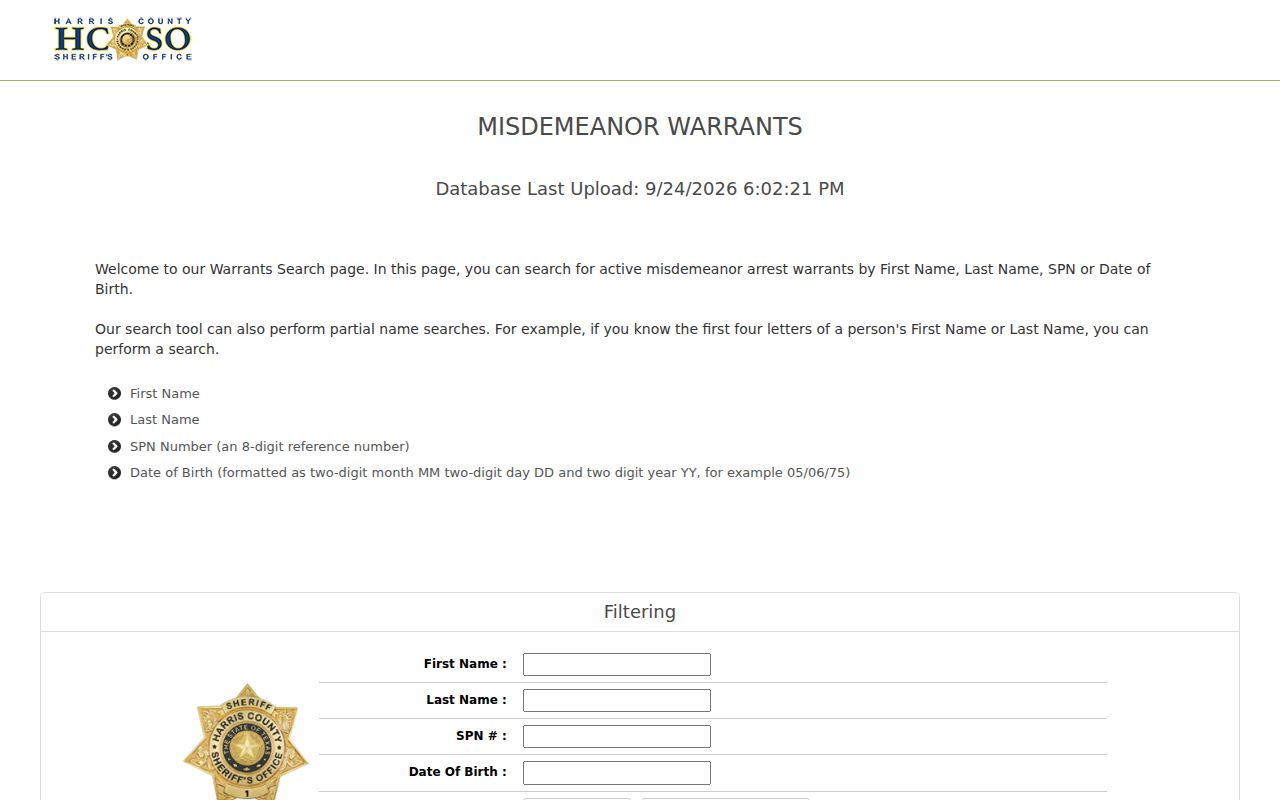
Those search fields describe one county’s display only. They do not create a Texas-wide warrant search. Note: a sheriff search can help find a local record, but the issuing court’s file controls the case and its current status.
Texas Records Requests Follow Custody
In Texas, a records request follows custody. The Texas Public Information Act, Texas Government Code Chapter 552, governs public information held by executive bodies such as DPS or a Texas sheriff’s office. Texas court files travel a different path. Texas court records answer to judicial access rules, not the ordinary agency route. Name the agency you are asking. Describe the record well. Give the case number, record type, and date range. DPS can answer only for the records it holds, and its request channels page explains where to submit a request and how its process works. For warrants, Texas Code of Criminal Procedure Article 15.26 makes an arrest warrant and its supporting affidavit public information, and after execution the magistrate’s clerk must make copies available for public inspection, subject to law or court order. A request for a specific executed warrant or docket entry works better. Broad asks for every Texas warrant from one office go nowhere. Active-investigation exceptions may apply. So may sealing orders and juvenile confidentiality rules. The Texas DPS public-information request page sets out the department’s request routes and related information.
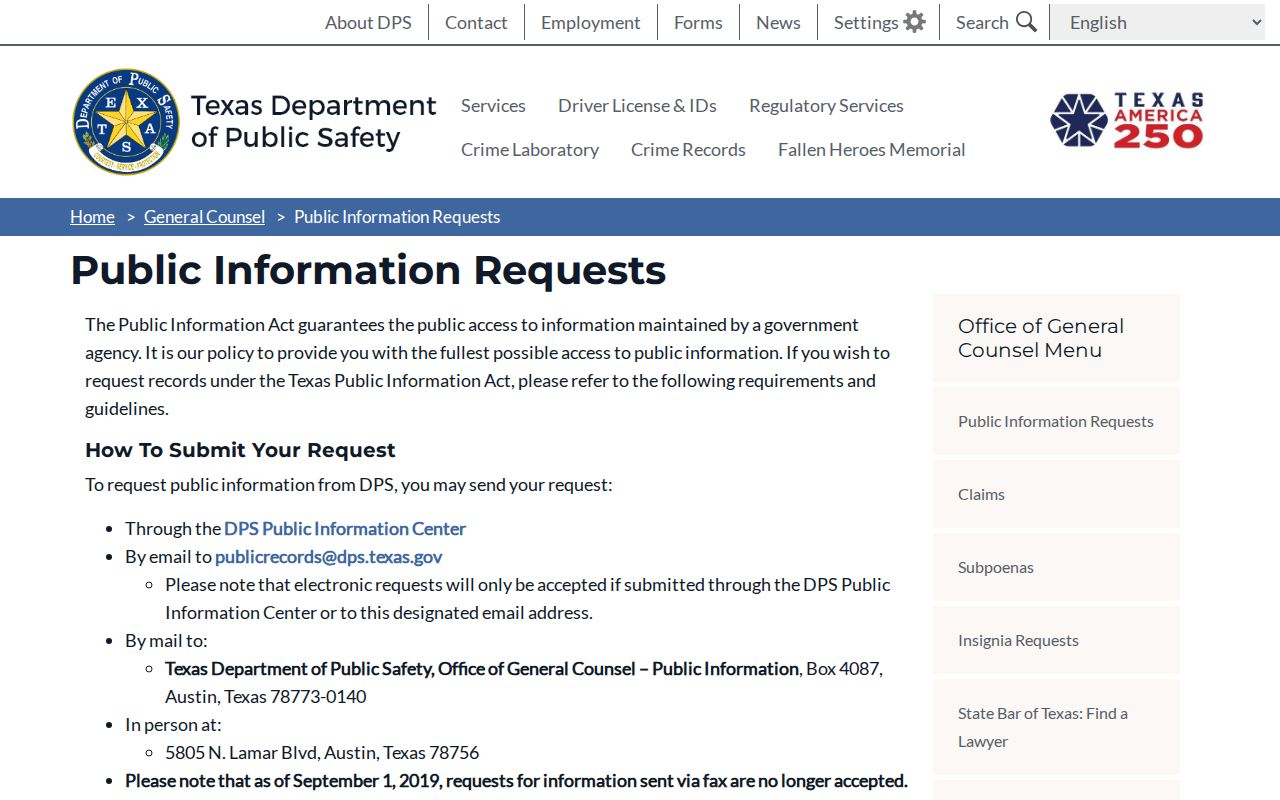
Use the DPS form only for DPS-held records. A Texas county court or sheriff keeps its own files and needs a separate request.
Which Texas Warrants Stay Restricted
Access to a Texas warrant record turns on the record and its status, not on whether a local website has a search box. Article 15.26 governs Texas arrest-warrant records and clerk inspection after execution. Search-warrant affidavits follow a different rule. Texas Code of Criminal Procedure Article 18.01 generally makes the affidavit public once the search warrant is executed, unless a judge seals it under the statute. Texas courts add another layer. Judicial access also runs through Texas Rule of Judicial Administration 12 and any applicable orders. Juvenile records sit apart entirely. Texas Family Code Section 58.010 keeps juvenile arrest-warrant and supporting records confidential. Certain juvenile fine-only misdemeanors carry statutory limits too. Chapter 552 gives agencies room to withhold. It allows withholding information tied to an active investigation. A court can seal a record when the law allows. A blank result in a Texas public portal cannot establish that no warrant exists.
Access rules: Check the issuing court about executed arrest warrants, sealed records, or juvenile matters; a Texas public search cannot override confidentiality rules or establish a no-warrant result.
For a possible Texas warrant, ask the local clerk first. The clerk can identify the controlling case record and explain whether inspection, a copy, or a formal request is available.
Federal Dockets Are Not Warrant Lists
A federal warrant is its own animal. It comes from federal criminal procedure. It is not a Texas county warrant, a Texas city traffic warrant, or a Texas FTAP license hold. PACER offers public federal court dockets and documents. Still, it is not a complete public federal-warrant search. A warrant or docket entry may be sealed, or it may not show whether the warrant is still active.
| Question | Texas Court or County Record | Federal Case |
|---|---|---|
| Who issues it? | A Texas court or magistrate under Texas law. | A federal judge or magistrate judge under federal process. |
| Where can records appear? | The Texas issuing court docket and local service-agency records. | Some public docket material through PACER. |
| Who can confirm status? | The Texas issuing court or Texas service agency. | Federal defense counsel, the federal court, or the U.S. Marshals district office. |
A federal matter calls for a federal docket and a lawyer, not a Texas county search treated as the whole answer. State and local cases are different. Start with the issuing court in Texas, or use the county directory to find the right clerk. Note: A public docket is a case-record service, not a live federal warrant-status service.